You may be asking what are automotive tariffs and whether they will raise your next car’s price. They are taxes on imported vehicles and parts, and the U.S. set 25% rates on both in 2025.
Our wider coverage of the automotive industry puts these rules in context.
| Item | Value |
|---|---|
| Added tariff on imported vehicles and certain parts | 25% |
| Vehicle tariff took effect | April 3, 2025 |
| Auto parts tariff took effect | May 3, 2025 |
| U.S. vehicle imports in 2024 | 8.1 million vehicles ($248.8 billion) |
| Earlier U.S. tariff on most imported passenger vehicles | 2.5% |
| First-period offset for U.S.-assembled vehicles | 3.75% of aggregate MSRP |
These figures come from the Congressional Research Service update of May 14, 2025 and the Commerce Department release of June 12, 2025. Rules and rates can change, so check the source before you rely on them.
How automotive tariffs work
A tariff is a tax charged on goods when they enter a country, and importers report it on their customs entries. Cars were never tariff-free before 2025, because most countries already charged baseline rates.
According to the Congressional Research Service, the earlier picture looked like this:
- The U.S. charged a tariff of 2.5% on passenger vehicles and 25% on light trucks for most vehicles outside free trade agreements.
- The EU charged a 10% tariff on passenger vehicles.
- Japan eliminated import tariffs on vehicles in 1978.
The 2025 rate is an additional tax on top of those baseline duties. It rests on Section 232 of the Trade Expansion Act of 1962, which lets the President act when the Secretary of Commerce determines that imports threaten national security. The same CRS note says the 2025 action relied on a 2019 Section 232 investigation.
What the 2025 U.S. auto tariffs cover
The White House fact sheet of March 26, 2025 says the 25% tariff applies to three groups of goods:
- Imported passenger vehicles: sedans, SUVs, crossovers, minivans and cargo vans.
- Light trucks.
- Key automobile parts: engines, transmissions, powertrain parts and electrical components.
Per the CRS, the vehicle tariff went into effect on April 3 and the parts tariff on May 3. Both dates fall in 2025.
Trade-agreement exceptions
Vehicles that comply with the USMCA are treated differently. Importers can certify their U.S. content, and the 25% tariff then applies only to the value of the non-U.S. content, as the March 2025 fact sheet explains.
That same fact sheet said USMCA-compliant parts would remain tariff-free until Commerce set up a process to tax their non-U.S. content. Separately, U.S. Customs and Border Protection’s guidance of October 31, 2025 handled parts from Japan, the United Kingdom and EU member countries under their own filing codes.
Offsets for U.S. assembly
A manufacturer with U.S. production can apply for an import adjustment offset. In its June 12, 2025 release, Commerce set the offset at 3.75% of aggregate MSRP for eligible autos assembled between April 3, 2025, and April 30, 2026. It set 2.5% for autos assembled between May 1, 2026, and April 30, 2027.
The stated aim is to temporarily reduce tariffs on imported parts to support final vehicle production in the United States. Law firm Sandler, Travis & Rosenberg notes that domestic parts producers can also ask to add more parts, in two-week windows that open four times a year, in January, April, July and October.
An April 2025 analysis from Troutman Pepper Locke reported that the administration indicated the tariffs are intended to be permanent, with no sunset date or review mechanism included.
Where U.S. vehicle imports come from
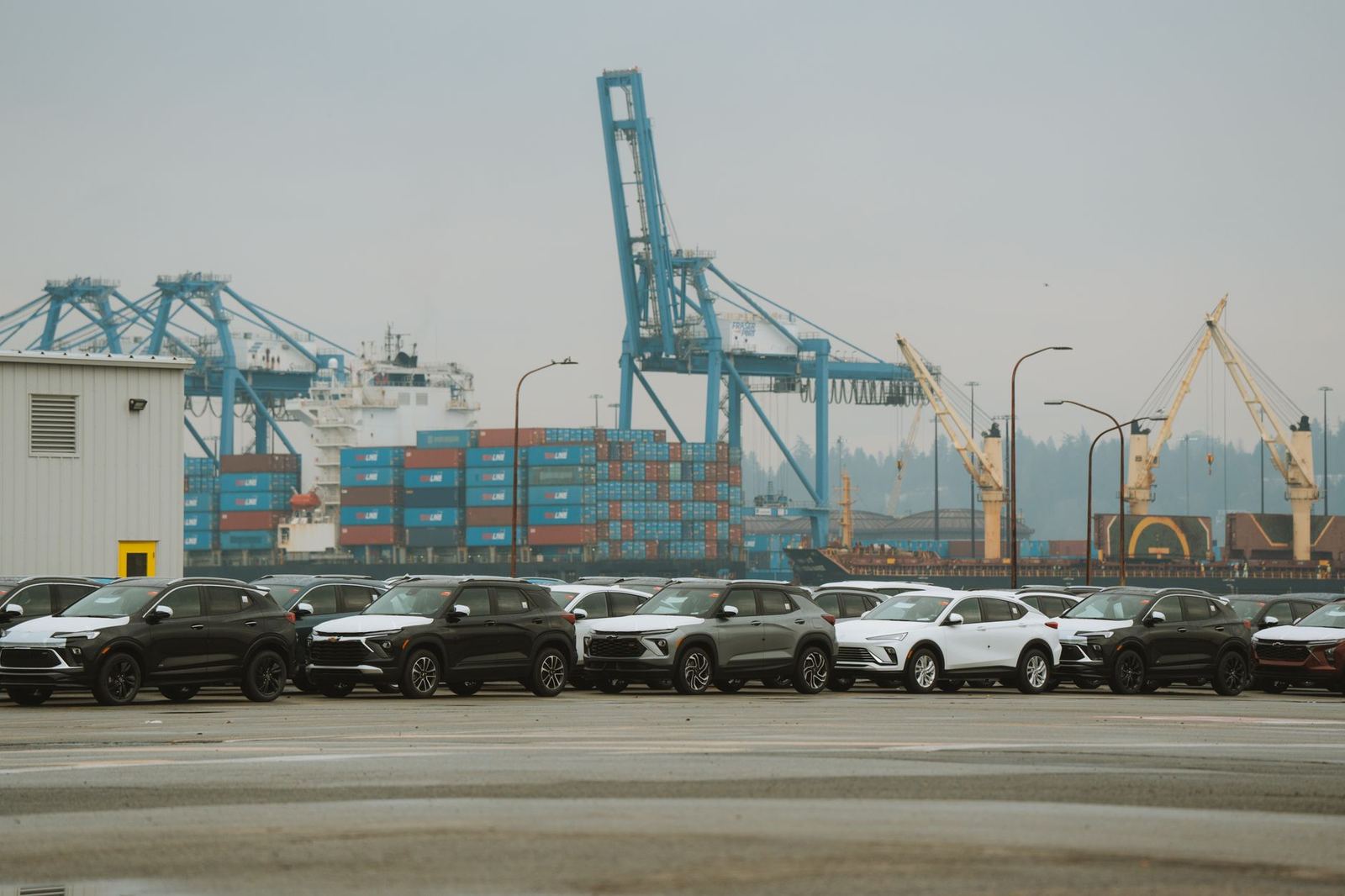
In 2024, the U.S. imported 8.1 million vehicles worth $248.8 billion, according to the CRS. They came primarily from Mexico, the European Union, Japan, South Korea and Canada. Those five partners provided 94% of U.S. vehicle imports by value and 96% by quantity.
The Troutman Pepper Locke analysis gave these shares of 2024 car imports:
- Mexico: approximately 22.8%.
- Japan: 18.6%.
- South Korea: 17.3%.
- Canada: 12.9%.
- Germany: 11.7%.
An imported car and a foreign-brand car are not the same thing. The CRS says foreign automakers had invested $109 billion in U.S. operations as of 2023, and produced 4.9 million of the 10.3 million vehicles built in the U.S. that year. To see why those production choices matter, read about how do automakers choose where to build factories in how do automakers choose where to build factories.
How tariffs can affect car prices
A tariff raises the cost of bringing a vehicle or part into the country. Whether that reaches the sticker price depends on what automakers absorb, what suppliers charge and what dealers do. The sources used here give no per-car estimate, so treat any single price figure with caution.
The White House fact sheet cites a 2023 U.S. International Trade Commission report on Section 232 and 301 tariffs covering more than $300 billion of imports. It says that report found “very minor effects on prices” for those earlier tariffs. The CRS notes that auto industry groups have cautioned tariffs could negatively affect the U.S. economy.
Parts exposure matters too. The White House fact sheet estimates the average domestic content of U.S.-assembled vehicles at only 50% and likely closer to 40%, which means a car built here can still carry tariffed parts.
If you are shopping, these checks are practical:
- Find out where the model is assembled and where its major parts come from.
- Watch whether the maker or dealer changes prices between model years.
- Remember that USMCA content and trade deals can change which rate applies.
Price is only one part of ownership, and once you buy it also helps to understand how do car recalls work.
Why governments use auto tariffs, and why critics object
The White House frames the tariffs as a national security measure. In 2024, according to its March 2025 fact sheet, Americans bought approximately 16 million cars, SUVs and light trucks, and 50% of these vehicles were imports (8 million). The same fact sheet puts the 2024 U.S. trade deficit in automobile parts at $93.5 billion.
It also says employment in automotive parts manufacturing totaled approximately 553,300 jobs in 2024, a decline of 286,000 jobs or 34% since 2000.
The CRS reports that some groups, such as labor unions, support the tariffs. Auto industry groups have warned about potential retaliation, and Canada has retaliated and disputed the tariffs at the World Trade Organization.
As of the CRS update of May 14, 2025, Congress was deliberating whether to support, curb or bolster oversight of the Section 232 auto tariffs. That is one more reason rates and exemptions may shift.
Frequently asked questions
What are automotive tariffs in simple terms?
Show answer
They are taxes on imported vehicles and vehicle parts. Under a March 26, 2025 proclamation, the U.S. added 25% tariffs on imported automobiles and certain parts under Section 232, according to the CRS.
Do automotive tariffs always raise car prices?
Show answer
Not necessarily in a way the sources here can measure. The White House cites a 2023 report that found “very minor effects on prices” for earlier tariffs, while auto industry groups cautioned about economic harm, per the March 2025 fact sheet and the CRS.
Are cars from Canada and Mexico taxed?
Show answer
The CRS describes 25% tariffs on all vehicle imports effective April 3, with exemptions for the U.S. content of USMCA-compliant vehicles. In practice the tariff falls on the non-U.S. content of those vehicles, as of the CRS update of May 14, 2025.
Can the tariff rules change?
Show answer
Yes. Congress was deliberating the tariffs as of the CRS update of May 14, 2025, and Commerce accepts requests to add parts in windows each January, April, July and October, per Sandler, Travis & Rosenberg. Check the official sources before you rely on any rate.