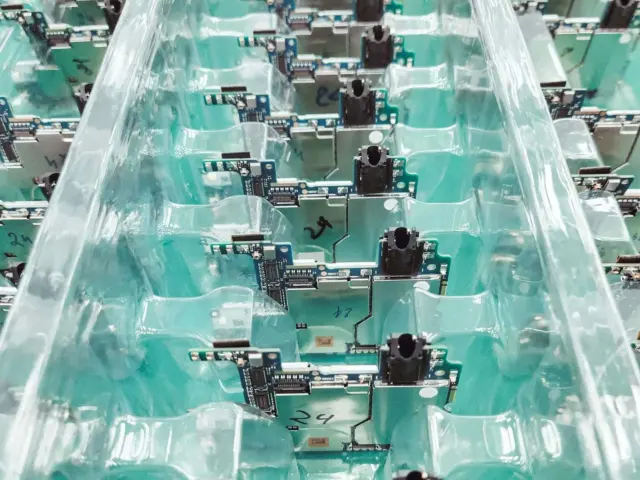
You may have struggled to find a new car and wondered: why did the car chip shortage happen? Pandemic whiplash. Automakers cut chip orders early in the pandemic, chipmakers served other buyers, and demand rebounded faster than supply.
This explainer is part of our wider coverage of automotive business.
| Item | Value |
|---|---|
| Vehicles of 2021 production forecast to be lost worldwide (AlixPartners, September 2021) | 7.7 million units |
| Forecast lost revenue for the global auto industry in 2021 (AlixPartners, September 2021) | $210 billion |
| The same lost-unit forecast in May 2021 | 3.9 million units |
| US 2021 production cut estimated in an Alliance for Automotive Innovation member survey (April 2021) | nearly 1.28 million vehicles |
| Time from chip order to microcontroller units arriving, per an AlixPartners director | about six months |
| Share of water TSMC and UMC can recycle, per IHS Markit | over 85% |
These figures come from Auto Remarketing and Supply Chain Dive. They are 2021 forecasts and estimates that can change, so check the source before you rely on them.
What triggered the car chip shortage in 2020?
The root cause was the pandemic’s effect on both sides of the market. In a letter to the Commerce Department, the Alliance for Automotive Innovation’s CEO John Bozzella said the shortage was due to two effects of the COVID-19 pandemic, as IndustryWeek reported on April 7, 2021.
The first effect was a jump in demand for electronics. Supply Chain Dive reported that chip demand rose as consumers spent on items like computers and gaming equipment.
The second effect hit the car side. Widespread auto production shutdowns in March and April 2020 led semiconductor factories, known as foundries, to move production resources into consumer-grade chips instead, according to the same IndustryWeek report.
Put together, the sequence ran like this:
- Plants shut in early 2020, and automakers slashed their orders from suppliers.
- Foundries moved production resources toward consumer-grade chips.
- Electronics demand rose as people spent on computers and gaming gear.
- Automakers’ demand returned, and they had a hard time getting that capacity back.
A Federal Reserve Board note on the episode describes severe production disruptions during 2021 and 2022, triggered by pandemic-era plant closures and shifting demand patterns, as set out in the Board’s FEDS Note.
Why carmakers could not simply buy other chips
It is tempting to think a carmaker could have bought chips from the same shelf as a phone maker. Bozzella said otherwise: “The chips that are generally used in vehicles are not the same chips used in consumer electronics devices.” That difference matters because the shift away from automotive demand was not easy to reverse.
The IndustryWeek report explains why. Foundries are costly to run and maintain, and chipmakers commonly operate on contracts to keep production running as consistently as possible. When automotive factories shut down in 2020, the foundries changed their production lines to adapt to the whipsaw in demand.
Getting that capacity back took time. An AlixPartners managing director, Dan Hearsch, said in April 2021 that it can take about six months from the time chips are ordered to when carmakers start getting the microcontroller units, and then come transport time and production time, as Supply Chain Dive reported.
Hearsch added in September 2021 that “there really are no ‘shock absorbers’ left in the industry right now when it comes to production or obtaining material,” per Auto Remarketing. For background on lean parts ordering, read our explainer on what is just-in-time manufacturing.
Extra shocks that made it worse
The pandemic was not the only blow. Supply Chain Dive’s April 2021 report listed the winter weather in Texas and a fire at a Renesas plant in Japan as further causes of supply problems, and the IndustryWeek report said the Alliance for Automotive Innovation also cited other challenges for the industry:
- February’s severe storms
- Congestion in ports on the West coast
- The March Suez Canal blockage
Water was another risk. Citing IHS Markit, Supply Chain Dive noted that Taiwan was undergoing a bad drought, and that chipmaking needs large amounts of ultra-pure water. TSMC and UMC can recycle over 85% of their water, but additional water is still required, on the order of tens of millions of gallons a day.
By September 2021, Auto Remarketing quoted AlixPartners saying that COVID-19 lockdowns in Malaysia and continued problems elsewhere had made things worse. Its global co-leader of automotive and industrial work, Mark Wakefield, added that chips were just one of many disruptions, including resin, steel and labor shortages.

How much production was lost?
Estimates grew as the shortage dragged on. In April 2021, Supply Chain Dive reported that the Alliance for Automotive Innovation had surveyed its members and found a 2021 production reduction of nearly 1.28 million vehicles was possible. IndustryWeek, writing the same day, said US output could stall by as many as 1.27 million vehicles.
The forecasts from AlixPartners, which covers the whole world, climbed much higher:
- April 2021: a production drop of closer to 2.5 million for 2021
- May 2021: 3.9 million units lost and $110 billion in lost revenue
- September 2021: 7.7 million units lost and $210 billion in lost revenue
The September numbers are from Auto Remarketing, and the April figure is from Supply Chain Dive. They are forecasts, not final counts of what was built.
On the factory floor, the effect varied. Hearsch said the shortage led companies to cut production, slow production or partially build vehicles to be finished when parts became available. Bozzella wrote that it had forced a number of automakers to halt production and cancel shifts in the United States.
Why the recovery took longer than expected
Early forecasts leaned optimistic. As of April 2021, Supply Chain Dive reported that IHS Markit expected it would be Q1 2022 before there was enough capacity to keep up with demand.
Hearsch expected carmakers to make up roughly 25% of missed production in Q4 of 2021, with the remainder likely pushed to 2022. He said demand for new vehicles was still strong and dealership inventory was starting to get low. In his words, lost production was starting to equate to lost sales.
The later record shows the disruption lasted longer. The Federal Reserve Board note linked above describes severe production disruptions during 2021 and 2022, so the problem did not end with the first recovery forecasts.
What carmakers and officials pushed for
The industry’s response focused on capacity. In April 2021, Bozzella urged the federal government to help fund more chip manufacturing that would support the auto industry. He suggested that part of the funding in the CHIPS for America Act be used to build capacity, as Supply Chain Dive reported.
That same report said TSMC had announced it was looking into an Arizona location, and Hearsch said that having production in the U.S. was naturally going to happen longer term. Some of these fixes involve partnerships between carmakers, suppliers and chipmakers. If that interests you, see what a deal structure looks like in our guide to what does a joint venture mean in the auto industry.
Officials also tried to map the problem. In September 2021, Auto Remarketing reported that the Commerce Department launched a request for information asking producers, consumers and intermediaries to share data on inventories, demand and delivery dynamics. Commerce Secretary Gina Raimondo asked business leaders to respond within 45 days.
Frequently asked questions
Did the chip shortage only affect cars?
Show answer
No. Supply Chain Dive reported in April 2021 that multiple industries had faced semiconductor issues that hampered production. Cars were hit hard, though, and the Federal Reserve Board describes severe disruptions to motor vehicle output during 2021 and 2022.
Are car chips the same as phone or laptop chips?
Show answer
Not according to the Alliance for Automotive Innovation. Its CEO, John Bozzella, said the chips generally used in vehicles are not the same chips used in consumer electronics devices.
How many vehicles did the shortage cost?
Show answer
It depends on the forecast and the date. As of AlixPartners’ September 2021 forecast, 7.7 million units of 2021 production would be lost worldwide, up from 3.9 million in its May forecast. These are forecasts, so check the original source.
How long was the shortage expected to last?
Show answer
In April 2021, IHS Markit expected it would be Q1 2022 before capacity caught up with demand. The Federal Reserve Board note describes disruptions across 2021 and 2022, so those early estimates proved too hopeful.